

View From The Top

Rajesh Khanna,
President,
Vantedge Search
As leaders progress through their careers, ambition does not disappear; it becomes more discerning. This edition of The Vantedge Point examines a quiet but important shift in executive leadership: the best leaders are becoming more selective about where and how they choose to exercise power. Larger mandates, broader authority, and greater visibility still matter, but they are no longer the only measures of success. Experienced leaders increasingly evaluate opportunity through the lens of alignment — with culture, board expectations, personal conviction, and the quality of contribution they can make.
This has important implications for boards, CEOs, and organizations competing for senior leadership talent. Attracting exceptional leaders is no longer only about offering scale, compensation, or title progression. It is about creating environments where judgment can be exercised well, trust can be sustained, and contribution remains meaningful over time. Across this issue, from expert reflections to career guidance and C-suite movements, one theme is clear: leadership maturity is not simply the pursuit of power, but the discipline to use it intentionally.
Why the Best Leaders Are Becoming More Selective About Power

For decades, leadership development was built around a simple assumption: as executives gained experience, they would naturally seek larger roles, broader authority, and greater responsibility. Organizations focused on preparing leaders for power because power itself was assumed to be the reward.
That assumption is beginning to evolve.
The most accomplished leaders are not abandoning ambition. They are becoming more intentional about where, how, and why they choose to exercise it.
This distinction matters because many organizations continue to evaluate leadership through familiar measures: compensation, title progression, succession readiness, and organizational influence. Yet once executives reach senior levels, another consideration begins to shape their decisions: alignment.
Not alignment with strategy. Alignment with the role itself.
Leadership at the top is fundamentally different from leadership on the way up. As authority increases, so does visibility. Expectations multiply. Every decision attracts scrutiny from multiple stakeholders. The role demands judgment under uncertainty, resilience under pressure, and the ability to navigate competing interests that cannot always be satisfied simultaneously.
Most organizations recognize these operational demands. Fewer appreciate how they reshape the way experienced leaders think about success.
Early in a career, opportunities are often accumulated. Exposure matters. New challenges matter. The instinct is to say yes because each experience expands capability and opens new doors.
Over time, however, accomplished leaders begin asking different questions. They become less interested in the size of an opportunity and more interested in its fit. They evaluate not only what a role offers, but also what it requires. They consider the quality of the leadership culture, the nature of the board relationship, the level of trust within the executive team, and the personal trade-offs attached to the role.
The question gradually shifts from “Can I do this?” to “Is this where I can contribute best?”
This is where many organizations encounter a blind spot.
Companies often assume that high-performing leaders are primarily motivated by larger mandates, broader responsibilities, and greater rewards. While these factors remain important, they are rarely the whole story. Experienced executives are increasingly evaluating whether a role allows them to operate with conviction, exercise sound judgment, and contribute meaningfully without compromising what matters most to them.
In many ways, this reflects a natural progression in leadership maturity.
The longer leaders operate at senior levels, the more they understand that every opportunity carries an opportunity cost. Every new role demands energy, attention, and focus that cannot be invested elsewhere. The challenge is less about gaining access to opportunities and more about choosing wisely among the opportunities available.
This is why leadership decisions that appear surprising from the outside often make perfect sense to the individuals making them. A leader may step away from a prominent role despite continued success. Another may decline a seemingly attractive opportunity. A third may choose to remain in a role rather than pursue a larger title elsewhere.
These decisions are not necessarily signs of reduced ambition. More often, they reflect a more refined understanding of what meaningful leadership looks like.

The best leaders eventually realize that success is not simply measured by how much responsibility they accumulate. It is measured by the quality of their contribution, the impact they create, and the extent to which their professional choices remain aligned with their values and priorities.
For boards and CEOs, this shift deserves attention.
For years, organizations have focused on identifying leaders who are ready for greater responsibility. The more important question may be whether they are creating environments where exceptional leaders want to remain fully engaged once they arrive.
That requires looking beyond traditional retention strategies. Compensation, succession pathways, and career progression remain important, but they are increasingly accompanied by other considerations: trust, purpose, autonomy, meaningful contribution, and the ability to sustain performance without losing perspective.
The organizations most likely to attract and retain exceptional leaders in the years ahead will be the ones offering the clearest sense of alignment between opportunity, culture, and contribution.
Because the future of leadership may not be defined by who aspires to power.
It may be defined by who remains intentional about how they choose to use it.
For more information on Vantedge Search, please contact us. We look forward to hearing from you.
Expert's Corner –
What's Trending?
Insights from Industry Leaders on Knowing When to Step Back
Power changes what leaders seek. Early in a career, opportunity is often the goal. With experience, the conversation shifts toward alignment, stewardship, and the deliberate allocation of energy. Recent reflections from leaders across industries reveal how success itself can reshape the way people think about ambition.

Hilary Duff, Chief Brand Director, Below 60°
Having entered stardom at just 13 through Disney’s Lizzie McGuire, Hilary Duff spent much of her early career saying yes to an expanding stream of projects, appearances, and opportunities. In a recent commencement address at Northeastern University, Duff reflected on how constantly accepting what the world was offering eventually came at the cost of her own voice and clarity around what she truly wanted. Her message to graduates — and increasingly relevant to leaders navigating high-pressure careers — was centered on intentionality: long-term growth depends not only on recognizing opportunity, but also on knowing where to direct one’s energy and when to step away from what no longer aligns.
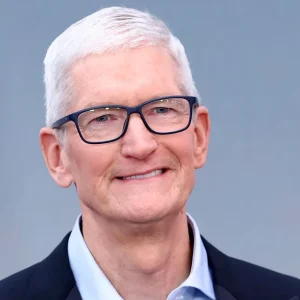
Tim Cook, Outgoing CEO of Apple
Explaining his decision to step down as Apple CEO, Tim Cook framed succession as an act of stewardship rather than withdrawal. He said the timing was right because the business was strong, the product roadmap was compelling, and the next leader was ready. Importantly, Cook also signaled that he would continue contributing where his experience carries distinct value — in sustaining Apple’s long-built global relationships. The insight is clear: mature leadership is not only knowing when to lead from the front, but when to shift power while still serving the institution where one is most useful.

Srinivas Narayanan, Former CTO – B2B Applications, OpenAI
Announcing his departure from OpenAI after three intense years leading some of the company’s fastest-growing products, Srinivas Narayanan framed the decision not as a retreat from ambition, but as a conscious pause to reconnect with what mattered personally. Even while describing the scale, speed, and historic nature of the work, Narayanan emphasized the importance of stepping back at the right moment and redirecting his attention toward family before deciding what comes next. His reflection reinforces a broader leadership reality emerging across high-performance environments today: the most accomplished leaders are increasingly evaluating success not only by momentum and scale, but by whether their lives still remain aligned with their own priorities.
Executive Movements:
Leadership Transitions & Strategic Pivots
CXO Movements
DoorDash
DoorDash has appointed former Amazon executive Tim Castree as CMO, reinforcing its ambition to evolve from a food-delivery platform into a broader commerce and advertising ecosystem. Castree’s experience in scaling customer engagement, brand strategy, and growth marketing across international markets aligns with DoorDash’s next phase of expansion. The hire also reflects a growing trend of companies seeking marketing leaders who can balance brand building, performance marketing, and revenue growth in increasingly data-driven business models.
Source: Obsessed with Internet Culture? You Could Make $200,000 Working for DoorDash.
CALIBRE Systems
CALIBRE Systems has promoted longtime executive Cassie Baxter to Vice President of its Defense Division, reinforcing the company’s commitment to leadership development from within. Bringing extensive experience in managing large-scale training, analytics, and defense programs, Baxter steps into the role as CALIBRE expands its focus on cybersecurity, AI, and compliance-driven solutions. The appointment highlights the growing demand for leaders who combine operational execution, business growth expertise, and deep domain knowledge in an increasingly technology-driven defense environment.
Source: Cassie Baxter Elevated to Defense Division VP at CALIBRE
Animoca Brands
Animoca Brands has announced a broader leadership transition, appointing Shaun Kraft as CFO while promoting Brian Chan to Chief Development Officer and repositioning other senior executives into strategic roles. The changes reflect the company’s focus on strengthening financial discipline, scaling growth initiatives, and aligning leadership capabilities with its ambitions across AI, digital assets, and decentralized technologies. The move also highlights a common pattern among maturing technology firms: evolving the leadership team from entrepreneurial execution toward long-term operational and strategic scalability.
Source: Animoca Brands announces key executive appointments | Animoca Brands
The Trade Desk
The Trade Desk has appointed veteran technology finance leader Nate Olmstead as CFO, bringing in an executive with experience across enterprise technology, AI infrastructure, and global operations. The hire follows a period of leadership turnover and signals the company’s focus on strengthening financial stewardship as it scales growth initiatives in an increasingly AI-driven advertising market. The move also reflects a broader trend among high-growth technology companies to recruit CFOs with operational and strategic experience capable of balancing investor expectations, profitability, and long-term expansion.
Source: HPE veteran takes Trade Desk top finance seat | CFO Dive
Alight
Alight has appointed seasoned finance executive Stephen Lasher as CFO, bringing in a leader with deep experience across technology, services, and enterprise transformation. His track record at IBM, Vonage, and Digital Turbine suggests a strong focus on financial discipline, operational execution, and investor engagement as Alight continues its growth and transformation journey. The appointment reflects a broader trend of companies seeking CFOs who can serve not only as financial stewards but also as strategic partners in driving business performance and long-term value creation.
Source: Alight to appoint Finance Industry Veteran Stephen A. Lasher as Chief Financial Officer
Siemens
Siemens has appointed Markus Grabmeier as CEO of its Electrical Products business, combining leadership continuity with an external perspective gained since his previous tenure at the company. His return comes as Siemens seeks to capitalize on long-term growth drivers including electrification, data centers, and the energy transition. The move reflects a common leadership strategy among industrial giants: bringing back proven executives with deep institutional knowledge and fresh market experience to steer businesses through periods of structural growth and technological change.
Source: Siemens names Markus Grabmeier CEO of Electrical Products
Marley Spoon
Marley Spoon has entered a new phase of leadership and governance transition following a successful refinancing, appointing an interim CEO, a new CFO, and initiating succession plans at both management and board levels. The coordinated changes suggest a company focused on stabilizing operations, strengthening financial discipline, and preparing for its next stage of growth after navigating a challenging market environment. The announcement also highlights the increasing importance of structured succession planning, with leadership continuity supported through advisory roles, phased transitions, and deliberate board oversight.
Source: Marley Spoon Group SE: Successful refinancing and leadership transition — TradingView News
Lennar
Lennar Corporation has appointed Jim Parker as Chief Operating Officer and David Grove as Executive Vice President, Homebuilding, effective immediately. Both executives previously served as Area Presidents overseeing the company’s East and West operations and bring three decades of homebuilding experience.
The leadership changes are aimed at strengthening Lennar’s operational and homebuilding functions as the company continues to expand. Executive Chairman, CEO and President Stuart Miller praised both leaders for their strong track records and commitment to delivering quality homes and customer value.
Source: Lennar Names Jim Parker Chief Operating Officer and David Grove EVP, Homebuilding
Mohawk
Mohawk Industries has appointed President and COO Paul De Cock as Chief Executive Officer, effective September 30, 2026, succeeding Jeffrey Lorberbaum, who will retire as CEO after leading the company for 25 years and will continue as Chairman of the Board. De Cock, a 20-year company veteran, has held several senior leadership roles since joining through the 2005 acquisition of Unilin and is expected to lead Mohawk’s next phase of growth and innovation as the world’s largest flooring manufacturer.
Marvell
Marvell Technology has named Dan Durn, currently CFO of Adobe, as its new Chief Financial Officer effective June 15, 2026, succeeding Willem Meintjes, who will remain in an advisory role through April 2027 to support the transition. The appointment comes as Marvell seeks to capitalize on strong demand for AI-driven data center infrastructure, with the company projecting its custom chip business to exceed $10 billion in revenue by fiscal 2029.
Source: Marvell names Adobe’s Dan Durn as finance chief amid growing AI demand | Reuters
Mastercard
Mastercard has appointed Ling Hai as Chief Financial Officer, effective August 3, 2026, succeeding Sachin Mehra, who will assume the newly created role of Chief Business Officer. The leadership changes are part of a broader management restructuring aimed at unifying customer-focused operations across global markets, enhancing coordination, and strengthening relationships with enterprise clients. Ling Hai brings extensive international leadership experience, having previously overseen Mastercard’s operations across Asia Pacific, Europe, the Middle East, and Africa.
Source: Mastercard appoints insider Ling Hai CFO in leadership reshuffle | Reuters
CMS
CMS Energy has appointed Sri Maddipati as Executive Vice President and Chief Financial Officer, succeeding retiring CFO Rejji Hayes, while Chris Fultz has been named President of Electric Supply, with both appointments effective June 3, 2026. Maddipati, a company veteran with nearly 20 years of experience in finance, treasury, and capital markets, will oversee key financial functions, while Fultz will lead the utility’s electric supply operations as CMS Energy advances its long-term energy strategy and succession planning efforts.
Yum Brands
Yum Brands has announced that Chief Operating Officer and Chief People & Culture Officer Tracy Skeans will retire in late 2026 after more than 25 years with the company. Skeans, who played a key role in driving the company’s operational excellence, talent strategy, and global transformation, will transition to an advisory position through early 2028 to support leadership succession and ensure a smooth handover of responsibilities.
Source: Yum Brands COO Tracy Skeans to retire after more than 25 years
Texas Instruments
Texas Instruments has appointed longtime executive Julie Knecht as Chief Financial Officer, effective August 1, 2026, succeeding Rafael Lizardi, who is retiring after 25 years with the company. The internal promotion signals continuity in the chipmaker’s disciplined capital allocation strategy as it invests heavily in manufacturing capacity and AI-driven opportunities, with investors closely watching how the leadership transition influences spending, free cash flow, and long-term growth.
Source: Texas Instruments CFO Shift Puts Focus On Capital Discipline And AI Spend
Newmont
Newmont has announced a series of senior leadership appointments, naming Brian Tabolt as Chief Financial Officer, alongside new Chief Operating and Chief Technical Officers, as the miner continues reshaping its executive team under recently appointed CEO Natascha Viljoen. The changes come amid strong gold prices and growing investor focus on returns, cost discipline, and operational performance. The leadership overhaul signals a push to strengthen alignment across finance, operations, and technical functions as the company pursues long-term value creation.
Source: Newmont names new CFO, COO as part of leadership overhaul | Reuters
FirstEnergy
FirstEnergy has named Chris Beam as President, West Virginia/Maryland Operations, Hanneke Counts as Vice President, Environmental Health and Safety, and Daniel Puscas as Chief Information Officer. The appointments strengthen the utility’s leadership bench across operations, safety, and technology, reflecting a strategic focus on reliability, operational discipline, and digital modernization. Together, the three leaders will help drive performance improvement, strengthen risk management, and support the company’s long-term transformation agenda.
Source: FirstEnergy Names Three Senior Leaders to Drive Operational, Safety and Technology Performance
Truist Financial
Truist has appointed Michael P. Lyons as its next President and CEO, effective September 1, 2026, succeeding Bill Rogers, who will transition to Executive Chair until his planned retirement in April 2027. Lyons joins from Fiserv, where he served as CEO, and previously held senior leadership roles at PNC and Bank of America. The appointment marks a planned leadership succession as Truist positions itself for its next phase of growth, innovation, and competitive expansion.
Source: Truist announces Michael P. Lyons as incoming CEO
AT&T
AT&T has named Jennifer Biry as its next Chief Financial Officer, succeeding Pascal Desroches, who will retire at the end of 2026 after a long tenure spanning AT&T, Time Warner, and WarnerMedia. Biry, a former AT&T executive with two decades of experience at the company, will join as Deputy CFO in July before assuming the top finance role on January 1, 2027. The planned transition comes as AT&T continues executing its long-term transformation strategy, with leadership emphasizing continuity and financial discipline.
Source: AT&T names new CFO
Insights: Inferring the why
Viewed individually, these announcements look like routine appointments, promotions, and succession plans. Viewed collectively, they reveal something more fundamental: organizations are quietly redefining what leadership readiness looks like in an environment where complexity is increasing faster than predictability.
- The Premium Is Shifting from Expertise to Perspective
Many of the leaders stepping into larger roles have accumulated experience across functions, markets, and business models. Organizations appear to be placing greater value on executives who can see connections across the enterprise rather than optimize a single domain. In an increasingly interconnected business environment, perspective may be becoming more valuable than specialization. - Leadership Is Being Evaluated Through a Longer Lens
A notable number of transitions involve phased handovers, advisory roles, founder continuity, and carefully orchestrated succession processes. This suggests organizations are becoming less focused on replacing individuals and more focused on preserving momentum. The emphasis appears to be shifting from leadership transfer to continuity of judgment. - Organizations Are Selecting Leaders for Tomorrow’s Questions
Many appointments align with challenges that are still unfolding rather than fully formed: AI adoption, digital infrastructure, energy transition, platform expansion, cybersecurity, and regulatory complexity. Increasingly, leadership decisions seem to be based not only on what executives have accomplished, but on the kinds of uncertainty they are expected to navigate next. - The Center of Gravity Is Moving Toward Operators
Across sectors, there is a noticeable preference for leaders with deep execution experience. At a time when many industries are balancing transformation with performance, organizations appear to be gravitating toward executives who can convert strategy into operational outcomes rather than simply articulate the vision. - The CFO Role Is Quietly Becoming One of the Most Strategic Seats in the Enterprise
Finance leadership appointments are striking mainly because of how these roles are being framed. Finance leaders are increasingly expected to shape growth, capital allocation, transformation priorities, investor confidence, and enterprise strategy. Financial stewardship remains essential, but it is no longer sufficient. - Judgment Is Emerging as a Leadership Currency
Perhaps the strongest signal running through these movements is the value being placed on judgment. Technology can generate information. Analytics can identify patterns. AI can accelerate decisions. Yet organizations continue to elevate leaders trusted to make sense of ambiguity, weigh competing priorities, and act without complete certainty. In an environment defined by rapid change, judgment may be becoming the ultimate executive differentiator. - What These Movements Indicate
Taken together, these appointments suggest that organizations are preparing less for a specific future and more for a future that remains difficult to define. The leaders being elevated are not simply experts, operators, or successors. They are individuals trusted to allocate attention, make trade-offs, and exercise sound judgment when the path forward is unclear. If there is a common thread across these movements, it is this: leadership is becoming less about authority and increasingly about discernment.
Choosing Power Wisely: The New Career Discipline for Senior Leaders
The most consequential career decisions are rarely about capability. They are about judgment. Once executives reach a certain level, opportunities become abundant. The challenge shifts from getting chosen to choosing wisely.
- Stop Asking, “Is This a Bigger Role?”
Ask instead: “What version of me does this role require?”
Many executives evaluate opportunities by scale, compensation, or reporting relationships. Yet the more important question is whether the role amplifies your strengths or gradually forces you to operate against your natural leadership style. The wrong role rarely fails because of capability. It fails because of misalignment.
- Pay Attention to Where Truth Travels
Before joining any leadership team, observe how bad news is handled. Every organization welcomes good news. The defining question is what happens when someone challenges an assumption, misses a target, or raises an uncomfortable issue. Your future effectiveness will depend less on your title and more on whether the culture allows you to remain intellectually honest.
- Beware of Becoming Professionally Successful but Strategically Trapped
Some executives spend years becoming indispensable to an organization, only to discover they have become dependent on a context that no longer serves their growth. Career resilience is not built through loyalty alone. It comes from maintaining relevance, curiosity, and optionality beyond your current role.
- Audit Your Sources of Validation
Early-career leaders are often motivated by recognition. Experienced leaders who remain effective learn to separate external validation from internal conviction. If every major decision is influenced by reputation, visibility, or perception, leadership gradually becomes performance rather than contribution.
- Build a Life That Can Survive Success
Many executives plan extensively for growth but very few plan for what happens after they achieve it. The most grounded leaders cultivate interests, relationships, and identities that exist outside their titles. Ironically, those who are least dependent on power often exercise it most effectively.
The opportunities do not stop as careers progress. If anything, they multiply. What changes is the realization that every yes quietly becomes a no to something else. The leaders who navigate this well are not necessarily more ambitious than their peers. They are simply clearer about what is worth their attention.