

View From The Top

Rajesh Khanna,
President,
Vantedge Search
In this edition of The Vantedge Point, we examine one of the most understated constraints in executive leadership: time. A full calendar can signal momentum, access, and involvement, but it can also conceal a more important question—whether senior leaders still have enough space to think beyond the business already in motion. The demands of the present are visible, urgent, and often justified. The future rarely arrives with the same clarity. Yet the responsibility of leadership is not only to respond well to what is immediate, but to preserve attention for what may become consequential.
This issue explores the distinction between strategic capability and strategic capacity. Many executives possess the judgment, range, and experience required to think ahead, but the design of their roles may leave little room to use those qualities fully. From expert reflections on executive time to career guidance and C-suite developments, the message is consistent: how leaders allocate attention shapes not only their effectiveness, but also the organization’s readiness for what comes next.
Strategy Time as the New Scarce Resource

A full executive calendar can be a reassuring sight. Decisions are moving, problems are getting attention, and the people who need access to leadership have it. In smaller organizations, close involvement in the day-to-day may simply be inseparable from the CEO’s job; that is a different conversation. The question becomes more interesting as organizations gain scale, leadership layers and specialist capability. What should still need the attention of the people at the top?
Senior leaders have always had to keep one eye on today and another on what lies ahead. The first part comes with a calendar of its own. Customers need answers. Performance needs scrutiny. Teams need direction. The second is less insistent. A shift in customer behavior does not ask for half an hour because it might matter two years from now. An early competitive move does not arrive as an escalation. An assumption behind the business can lose relevance long before the numbers expose it.
The future, unlike the present, is remarkably bad at getting onto the calendar.
Strategic capability—or room to use it?
When an executive is described as “not strategic enough,” the diagnosis usually begins with the person. Perhaps the leader is too immersed in execution, too anchored in a function or not looking far enough beyond the current business.
Sometimes that diagnosis is right. But it can overlook the shape of the job itself.
Many decisions now travel across functions that were once more distinct. A commercial decision can quickly become a technology, finance, operations and talent decision as well. Senior leaders are often the people best placed to see those connections, so their involvement is entirely justified. The issue emerges gradually, as one reasonable demand follows another until there is little distance from the business in motion.
This is where strategic capability and strategic capacity begin to part company. An executive may have the judgment and range the company hired for, while having fewer opportunities to apply them beyond matters already in play. That is worth recognizing before a lack of time to think is mistaken for a lack of strategic depth.
The present has a stronger claim
There is good reason for today to command attention. Strategy is of little use if customers are neglected, execution slips or important decisions wait unnecessarily. Staying close to the business also gives executives the context from which good strategy is made.
The present, however, has an advantage. Its claims are concrete. A missed number appears on a dashboard. A delayed project has a deadline. A disagreement can be escalated. Each gives the executive a clear reason to act.
What may matter three years from now usually arrives with less certainty. A new technology may prove transformative or amount to very little. A competitor at the edge of the market may stay there. A subtle change in customer expectations may be temporary—or the beginning of something larger. These are difficult claims to make on a Tuesday afternoon when something else needs an answer by five.
So strategy time is rarely lost in one dramatic trade-off. It disappears in perfectly sensible increments. The immediate business keeps making a convincing case for the next hour, while the longer view waits for a quieter week that may never quite arrive.

What happens to the time AI saves?
AI could change this equation. Research that once took hours can be completed far more quickly. Information can be condensed, routine work shortened and decisions supported faster. For executives carrying heavy workloads, those gains matter.
But saved time has no guarantee of staying saved. Faster analysis makes it possible to request more analysis. Quicker access to information can bring quicker expectations. The hour recovered in one part of the day can easily be occupied somewhere else.
This makes the destination of that saved time almost as interesting as the saving itself. Some of it will rightly go back into the current business. But if all of it does, technology may increase the amount an executive can handle without changing how much space remains to look ahead.
Keeping both in view
There is no case here for senior leaders stepping away from the present. Nor is strategy served by carving out thinking time that is disconnected from what customers, employees and the business are experiencing now. Good judgment needs proximity as much as perspective.
The difficulty is keeping both within view when only one arrives carrying deadlines.
That makes strategy time less a matter of finding an empty afternoon than of deciding that some attention should remain available before there is an obvious demand for it. Not every weak signal will become important. Not every question about the future will lead somewhere useful. That uncertainty is part of the work.
Meetings will be scheduled. Problems will be escalated. Decisions will acquire deadlines. The future will continue to do none of those things.
And perhaps that is the point. The present earns its place on the executive calendar every day. The future sometimes needs a place before it has earned one.
For more information on Vantedge Search, please contact us. We look forward to hearing from you.
Expert's Corner –
What's Trending?
Insights from the Industry Leaders on Managing Executive Time with Intent
An article from Singapore Management University’s Lee Kong Chian School of Business, “Tick tock: How effective leaders manage their time,” looks at executive time through a deceptively simple premise: how leaders spend it communicates what they consider important. A CEO’s allocation of time can signal priorities to the wider organization, which makes the question of managing it about more than getting through a demanding schedule. The examples of three prominent leaders show just how differently that finite resource can be approached.
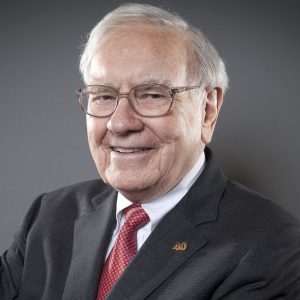
Warren Buffett
Warren Buffett offers a useful departure from the familiar image of the executive who extends the working day by beginning before everyone else. Buffett said that he likes to get eight hours of sleep and has no desire to get to work at four in the morning. His example underlines the value of knowing when you work best and arranging demanding or creative work accordingly. The relevant measure is not simply how early the day starts or how many hours can be fitted into it, but how effectively those hours are used.
Bill Gates
Bill Gates provides a very different example. His well-known “think weeks” involved spending time alone in a cabin reading books and reviewing ideas and pitches submitted by Microsoft employees about potential innovations. What makes the practice notable is the kind of activity for which the time was reserved. Reading, processing information and considering ideas were given space away from the normal movement of the working day. It illustrates the value of leaving room in an executive schedule for reflection and new insights— room that can disappear when every available hour has already been assigned a purpose.
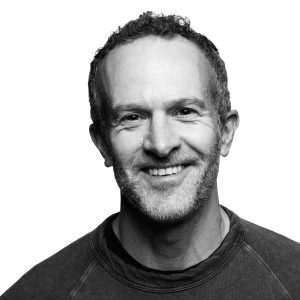
Jason Fried, Founder & CEO at 37signals
The implications of executive time can also extend beyond the executive. Jason Fried, Founder & CEO at 37signals, makers of Basecamp and HEY, has argued against contacting employees after working hours unless there is a genuine emergency—and that such emergencies should be rare. His example draws attention to something easily overlooked: communication habits can establish expectations beyond one person’s calendar. When leaders send emails, how quickly they expect replies and how available they make themselves can influence the working norms experienced by others.
Executive Movements:
Leadership Transitions & Strategic Pivots
CXO Movements
Burton Snowboards
Burton Snowboards has appointed Denny Bruce as CEO, effective September 21, 2026, as the family-owned company approaches its 50th anniversary. Bruce, who previously worked at Burton from 2003 to 2005, has since held leadership roles at Vans, Skullcandy, Traeger and Dickies, and most recently served as CEO of Gozney. He succeeds Donna Carpenter, who has served as interim CEO since June and will continue as Chairman of the Board. Bruce will be based at Burton’s headquarters in Burlington, Vermont.
Source: Burton names Denny Bruce CEO as company looks to next 50 years | Vermont Business Magazine
LumApps
LumApps has appointed Sébastien Cano as CEO, effective December 1, 2026. Founder and current CEO Sébastien Ricard will become Executive Chairman, remaining involved in long-term strategy and governance. Cano brings more than two decades of enterprise software leadership, including senior roles at Thales and Gemalto. Based at LumApps’ U.S. headquarters in Austin, he will focus on executing the company’s Workhub product vision and expanding customer value globally.
Source: LumApps Appoints Sébastien Cano as Chief Executive Officer | Corporate – EQS News
BlackRock TCP Capital Corp
BlackRock TCP Capital Corp CEO Phil Tseng resigned on August 31 and is due to leave BlackRock on October 1, following a period of portfolio restructuring and loan markdowns. Jason Mehring has been appointed CEO, while Dan Worrell will become president. TCPC recently agreed to sell $523 million of loans to a Pantheon-backed vehicle and is exploring options for another $671 million of assets. The fund cut its net asset value by 19% in January and a further 5% in May.
Source: BlackRock private credit fund CEO exits amid TCPC overhaul – Private Equity Wire
Hornbeck Offshore Services
Following the completion of its all-stock merger with Helix Energy Solutions Group, Hornbeck Offshore Services announced the following leadership appointments:
- Todd M. Hornbeck — President, Chief Executive Officer and Director
- William L. Transier — Chairman of the Board
- R. Potter Adams — Executive Vice President and Chief Financial Officer
- Scott “Scotty” A. Sparks — Executive Vice President and Chief Operating Officer – Subsea Services and Well Intervention
- Ben D. Todd — Executive Vice President and Chief Operating Officer – Marine Transportation and Specialty
- Samuel A. Giberga — Executive Vice President, General Counsel and Secretary
- Brian M. Cook — Executive Vice President and Chief Accounting Officer
- Priscilla B. Heistad — Executive Vice President and Chief Human Resources Officer
- Daniel M. Stuart — Executive Vice President and Chief Commercial Officer
- Carl G. Annessa — Executive Vice President – Defense / Emerging Technologies
- Michael J. Nicaud — Senior Vice President, Associate General Counsel and Chief Compliance Officer
Source: Hornbeck and Helix Complete Merger, Creating a Premier Integrated Offshore Services Company
WaFd / EverBank
WaFd and EverBank Financial Corp have agreed to a $3.9 billion reverse merger, with EverBank merging into WaFd and the combined company adopting the EverBank Financial Corp name. Following closing, Greg Seibly will serve as CEO, Brent Beardall as President, and Robert Radway as Chairman of the combined bank and holding company. The transaction will create a nationwide banking organization with more than 250 financial centers and an expanded commercial banking platform.
Source: WaFd And EverBank Announce $3.9 Billion Reverse Merger
Markel Group
Markel Group CEO Tom Gayner has been appointed Chairman, succeeding Steve Markel, who will retire as Chairman and leave the Board at the company’s 2027 Annual Meeting. Simon Wilson and Andrew Crowley have been promoted to Co-Presidents, effective immediately. Wilson will also serve as CEO of Markel Insurance, while Crowley will serve as CEO of Markel Ventures. Michael O’Reilly will remain Lead Independent Director.
Source: Markel Chairman Steve Markel to Retire and Will Be Succeeded by Tom Gayner
StablecoinX
StablecoinX has appointed Christopher Jensen as CEO and a member of its Board of Directors, effective immediately. Jensen joins from Franklin Templeton, where he was a Senior Vice President, Portfolio Manager and Director of Digital Asset Research, and a founding member of its digital asset group. He succeeds Ted Chen, who will remain Chairman and focus on long-term strategy, capital markets positioning and StablecoinX’s partnership with Ethena. Jensen will lead day-to-day operations across the company’s Infrastructure Services, Infrastructure Software and Distribution Services businesses, as well as oversee its treasury strategy.
Source: StablecoinX Appoints Christopher Jensen as Chief Executive
Northern Technologies International Corporation
Northern Technologies International Corporation has appointed Gautam Ramdas as President and CEO and elected him to its Board, effective September 4, 2026. He succeeds G. Patrick Lynch, who has become Chairman and will remain an NTIC employee to assist with the transition. Brian Haglund has been promoted from Vice President of Operations – North America to Chief Operating Officer. Former Chairman Richard Nigon has been appointed Lead Independent Director.
Source: Northern Technologies International Corporation Announces
Enbridge
Enbridge has named Michele Harradence to succeed Greg Ebel as CEO when he retires at the end of 2026. Harradence, who joined Enbridge in 2014, currently leads its gas distribution and storage business and oversaw the integration of three U.S. gas utilities acquired from Dominion Energy. Ebel will remain on the Board through December 31 and serve as an advisor to the Board and Harradence until May 2027.
Source: Enbridge names industry veteran Michele Harradence as successor to retiring CEO Ebel | Reuters
Adobe
Adobe has appointed Anil Chakravarthy as President and CEO, effective December 1, 2026, succeeding Shantanu Narayen after 18 years as CEO. Narayen will transition to Executive Chair. Chakravarthy joined Adobe in 2020 and currently leads its Customer Experience Orchestration Business and worldwide field operations. Separately, Adobe’s CFO search remains underway, with Steven Day serving as interim CFO following Dan Durn’s departure earlier this year.
Source: Adobe’s New CEO Takes Over in December. Is the Open CFO Search the Bigger Risk?
Concentra
Concentra has appointed Tanner Newton as Executive Vice President and Chief Financial Officer, effective November 1, 2026. Newton, currently Senior Vice President of Strategy and Finance, will lead the company’s finance organization, including accounting, financial planning, treasury, tax, capital markets, corporate development and investor relations. He will report to Matt DiCanio, who will become President and CEO on the same date. The appointment is part of Concentra’s previously announced multiyear leadership succession process.
Source: Concentra Appoints Tanner Newton Chief Financial Officer
Clearway Energy
Clearway Energy has announced three senior leadership changes as part of its finance and transformation leadership. Sarah Rubenstein, currently CFO, will become Head of the Transformation Office at Clearway Energy Group, focusing on digital and data transformation and integration, effective October 1, 2026. Steven Ryder will succeed her as Clearway Energy’s CFO while retaining his CFO role at Clearway Energy Group. Samantha Prout has joined Clearway Energy as Senior Vice President, Accounting and Controller, effective immediately.
Source: Clearway Energy, Inc. Announces Senior Leadership Changes
LiqTech International
LiqTech International’s Chief Financial and Operating Officer, David Noerby Foss Kowalczyk, has notified the company of his intention to resign, effective November 30, 2026. The company said his departure is not due to any disagreement over its operations, policies or practices. Kowalczyk currently holds responsibility for both the CFO and COO functions.
Source: LiqTech International Announces Upcoming CFO-COO Leadership Transition – TipRanks.com
Genpact
Genpact has appointed Sumita Pandit as Senior Vice President and Chief Financial Officer, effective September 9, 2026. She succeeds Michael Weiner, who will remain as an advisor through the end of Q1 2027. Pandit most recently served as President and CFO of Radian Group and previously held senior roles at dLocal and J.P. Morgan. She will report to President and CEO Balkrishan “BK” Kalra and join the Genpact Leadership Council.
Source: Genpact Appoints Sumita Pandit as Chief Financial Officer
MSC Industrial Direct
MSC Industrial Direct has appointed Robert “Rob” Kuhns as Executive Vice President and Chief Financial Officer, effective September 14, 2026. Kuhns previously served as Vice President and CFO of TopBuild and held senior finance roles at Mohawk Industries, NCH Corporation and Ingersoll Rand. Interim CFO Greg Clark will step down from that role and continue as Vice President of Finance and Corporate Controller.
Source: MSC Industrial hires new CFO with $650K salary | MSM 8-K Filing
Oportun
Oportun has appointed Bill Franklin as Chief Financial Officer, effective September 8, 2026. Franklin will lead the company’s finance organization and support its financial strategy, operating discipline and long-term value creation. He previously served as Senior Vice President and CFO of Consumer Banking at Discover Financial Services and held leadership roles in treasury and investor relations. Franklin brings more than 20 years of financial leadership experience spanning financial planning and analysis, capital markets, investor relations and corporate development.
Source: Oportun Names Bill Franklin as Chief Financial Officer
Anteris Technologies
Anteris Technologies has appointed Brent Moen as Chief Financial Officer, effective September 12, 2026. Moen brings more than 25 years of experience across public and private companies, including capital markets, investor relations, M&A and medical technology. He most recently served as CFO of LifeLens Technologies and previously held CFO roles at Tactile Systems Technology and Entellus Medical. Current CFO Matthew McDonnell will transition to Head of Australia on the same date.
Source: Anteris Technologies appoints Brent Moen as chief financial officer
Graphic Packaging Holding Company
Graphic Packaging Holding Company has appointed Tatiana Berardinelli as Executive Vice President and Chief Human Resources Officer, effective September 8, 2026. She will report to President and CEO Robbert Rietbroek and join the Executive Leadership Team. Berardinelli joins from Multi-Color Corporation, where she served as CHRO, and previously held the same role at Clariant. She brings 25 years of global HR leadership experience across packaging, specialty chemicals, coatings and advanced materials.
Source: Graphic Packaging Holding Company Appoints Tatiana Berardinelli Chief Human Resources Officer
Asbury Automotive Group
Asbury Automotive Group has appointed Wendy Reynolds-Dobbs as Senior Vice President and Chief Human Resources Officer, effective September 14, 2026. Reynolds-Dobbs joined Asbury in 2022 and currently serves as interim CHRO and Vice President, Talent Development & Chief Culture Officer. She previously held senior talent and DEI leadership roles at Unisys and Change Healthcare. Former CHRO Jed Milstein will provide consulting services through the end of 2026 to support the transition.
Charter Communications
Charter Communications has named Kevin Howard interim Chief Financial Officer, effective October 15, 2026, as current CFO Jessica Fischer steps down to pursue another professional opportunity. Howard currently serves as Executive Vice President and Chief Accounting Officer & Controller and previously served as Charter’s interim CFO in 2010. He has led the financial integration of several major Charter transactions, including the acquisitions of Time Warner Cable, Bright House Networks and Cox Communications. Charter has begun a comprehensive search for a permanent CFO.
Source: CHARTER ANNOUNCES CHIEF FINANCIAL OFFICER TRANSITION | Charter Communications Inc.
GXO Logistics
GXO Logistics has appointed Balaji Rangaswamy to the newly created role of Chief Information Officer, reporting to CEO Patrick Kelleher. Rangaswamy will lead the technology organization’s “Foundation” mandate, covering enterprise systems, data governance, cybersecurity and digital resilience. Chief Technology Officer Nizar Trigui will focus on the “Acceleration” mandate, including Agentic AI, Physical AI, robotics and GXO IQ. Rangaswamy joins from Collins Aerospace, where he served as Vice President of Digital Technology.
Source: GXO Names Balaji Rangaswamy Chief Information Officer | GXO
CVD Equipment Corporation
CVD Equipment Corporation has named Warren Cheesman Acting Chief Executive Officer, effective September 3, 2026, as President and CEO Emmanuel Lakios departs the company and its board. The leadership change accompanies a restructuring under which CVD will stop pursuing new equipment system orders and reduce its workforce by approximately half. Cheesman has served as Vice President of Manufacturing Operations since 2022 and brings more than 30 years of experience across engineering, operations, quality and strategic sourcing.
Source: CVD Equipment Corporation Announces Restructuring Plan and Leadership Transition
Daktronics
Daktronics announced the retirement of Bradley T. Wiemann, Executive Vice President and Advisor to the CEO, effective September 5, 2026. Wiemann retired after more than 34 years with the company, during which he held multiple leadership positions. He previously served as Interim President and Interim Chief Executive Officer. His retirement was governed by a termination agreement previously disclosed by the company in February 2026.
Rainmaker Worldwide
Rainmaker Worldwide ended its interim CEO arrangement with Larchwood Management Partners on September 10, 2026, as Michael O’Connor resigned as Chairman, Interim CEO, principal executive officer and director for health reasons. Before departing, O’Connor appointed Ryan D. Moore and Michael A. Skinner to the board. Skinner was subsequently named President, Treasurer and principal executive officer, while Moore was appointed Secretary.
Source: Rainmaker Worldwide appoints new top executive | RAKR 8-K Filing
Lululemon Athletica
Lululemon Athletica appointed Heidi O’Neill Chief Executive Officer, effective September 8, 2026, and added her to the board as a Class II director. The board expanded from 11 to 12 directors to accommodate her appointment. Interim co-CEOs Meghan Frank and Andre Maestrini ended their temporary leadership roles when O’Neill took office.
Source: Lululemon Athletica (LULU) Resets Leadership, Is The Stock A Bargain?
Otis Worldwide
Otis Worldwide announced that Judy Marks will retire as Chair, President and Chief Executive Officer once a successor is appointed. The board is considering both internal and external candidates, with the CEO transition expected to be completed in the first half of 2027. Marks will remain with Otis through July 31, 2027, to support the leadership transition.
AIG
AIG announced that Jon Hancock will retire as Executive Vice President and CEO of General Insurance and become Senior Advisor, effective December 31, 2026. In the advisory role, he will support strategic and growth priorities and remain on the boards of Talbot Underwriting, AIG UK and Tata AIG General Insurance. Hancock joined AIG in 2020 and has led its General Insurance business since 2025.
Source: American International Group Inc’s Dividend Analysis
Capital Group
Capital Group appointed Guillermo Veiga as Chief Information Officer, with Veiga set to join in November 2026 and succeed Marta Zarraga, who will retire at year-end. Veiga joins from Standard Chartered Bank, where he serves as Group Chief Information and Operations Officer. He has also held senior roles at Amazon Web Services, Cisco and Banco Santander, and brings experience spanning technology, operations and global transformation.
Source: Capital Group Announces Appointment of New Chief Information Officer
Insights: Inferring the why
Taken together, these leadership changes suggest that companies are not simply filling vacancies. Many of the appointments are occurring alongside a change in business conditions, strategic priorities, organizational structure, or leadership needs. Across the stories, five broader signals emerge.
- Leadership changes are increasingly about resetting the mandate, not simply replacing the executive.
Several appointments coincide with a distinct change in the business itself: restructuring, a merger, expansion, a new growth phase, or a shift in strategic priorities. In these situations, the incoming executive is not simply inheriting an established role. The appointment reflects what the organization now needs that role to accomplish, making leadership selection part of a broader business transition.
- Internal appointments are being used where continuity has strategic value.
A number of companies have elevated executives who already understand their operations, stakeholders, financial structures, or strategic priorities. This is particularly visible where another senior leader is moving simultaneously or the organization is already navigating significant change. Internal succession can preserve institutional knowledge and provide continuity while responsibility shifts to a new leader.
- New leadership responsibilities are forming around transformation itself.
Several changes place explicit senior-level ownership around AI, automation, data, technology modernization, operational resilience, or enterprise transformation. The structures differ: some create new roles, some expand existing mandates, and others strengthen oversight around particular transformation priorities. What connects them is the decision to give these changes identifiable leadership ownership rather than leave them distributed across the organization.
- The finance mandate is moving further into business strategy and execution.
The CFO appointments repeatedly emphasize experience beyond accounting and reporting, including capital markets, M&A, corporate development, investor relations, strategy, capital allocation, and operational leadership. This is particularly visible in companies pursuing growth or navigating broader organizational change. Financial stewardship remains central, but the appointments indicate demand for finance leaders who can also help shape and execute the next stage of the business.
- Leadership transition itself is becoming something companies actively design.
Across the stories, companies use interim executives, advisory periods, extended incumbent tenures, executive-chair arrangements, and other transition mechanisms to manage the period between leadership structures. The approaches vary, but the purpose is similar: maintaining clarity over responsibility and preserving continuity while leadership changes hands. The transition period is being treated as a distinct management requirement rather than simply the interval between departure and appointment.
What This Adds Up To
The common thread is greater specificity about what leadership needs to solve at a particular moment. The same executive title can carry a very different mandate depending on whether the immediate requirement is transformation, continuity, financial execution, growth, or organizational change. That makes the most revealing part of an appointment not simply who has been chosen, but what the organization has chosen to place in their hands.
Is Your Role Expanding Your Range?
At C-suite level, development is rarely about adding another conventional leadership skill. A more useful question is whether the role is continuing to expand the executive’s range—or simply making them increasingly accomplished at handling its existing demands. Five practices can help keep that development moving.
- Track the questions that never become urgent
Executives know what repeatedly demands their attention. More revealing can be what never does. Keep a record of consequential questions that are continually displaced because nothing requires an immediate answer: an assumption about the market, an emerging capability, an early change in customer behavior, a talent issue that has not yet become a problem. Revisit the list periodically. Over time, it can reveal which parts of your thinking the operating rhythm of the role consistently pushes aside.
- Audit where your judgment is being used
A calendar tells you where your time went. Look instead at where your judgment went. Which situations genuinely required the experience, perspective or authority you bring as a senior executive? Which largely required a decision, an approval or another pair of hands? The distinction matters for career development because the work that repeatedly calls on your judgment is also the work that keeps developing it. A full calendar can contain surprisingly little that stretches the qualities for which an executive was hired.
- Keep part of your information diet outside the company
The higher an executive rises, the more information tends to arrive already selected, summarized and interpreted by the organization. Dashboards, presentations and internal analysis are indispensable, but they can gradually define the boundaries of what the executive sees. Maintain some direct exposure to customers, adjacent industries, unfamiliar business models and people who do not share the company’s assumptions. The purpose is not to consume more information. It is to retain sources of perspective that have not already passed through the organization’s filters.
- Watch for accidental specialization
Senior roles can become narrower without the title changing. If the same categories of problem repeatedly climb to you, consider what those demands are training you to become exceptionally good at. Some will deepen useful enterprise judgment. Others may gradually make you the organization’s most experienced resolver of a particular kind of issue. Expertise gained through repetition is valuable, but an executive planning a longer career should notice when depth in the current role begins to come at the expense of range.
- Build experience before the next role requires it
Waiting for a broader title to acquire broader experience leaves development to succession rather than preparing for it. Look for consequential decisions outside the territory your current remit naturally provides and find legitimate ways to gain exposure to them. A functional executive may need greater familiarity with customers, capital allocation or enterprise technology; another may need deeper experience with talent, operations or unfamiliar markets. The objective is not to stray into someone else’s responsibilities. It is to ensure that when a larger mandate arrives, some of its terrain is already familiar.
At this level, career development is easy to postpone because the current role supplies so much experience of its own. The more useful test is whether that experience is widening the executive you are becoming, or simply deepening the executive the organization already knows.