

View From The Top

Rajesh Khanna,
President,
Vantedge Search
In this edition of The Vantedge Point, we examine a question that deserves greater attention in executive development: does experience always lead to better judgment? Senior leaders accumulate knowledge, recognize patterns, and become increasingly effective at navigating familiar challenges. Yet continued success can sometimes conceal a narrowing of perspective. As organizations become more sophisticated in filtering information and resolving complexity before it reaches the C-suite, executives may find fewer opportunities to confront the unfamiliar. The distinction matters because leadership readiness depends on the ability to exercise judgment when established experience no longer provides a reliable guide.
The perspectives throughout this issue reinforce the importance of keeping judgment in development. Our expert insights and career guidance explore how unfamiliar challenges, candid disagreement, and exposure beyond established expertise can sharpen executive thinking. Meanwhile, recent C-suite movements reveal how boards are redesigning leadership mandates around evolving business priorities. For organizations assessing future leaders, the consideration extends beyond what executives have accomplished. It is whether their experience continues to prepare them for decisions they have yet to encounter.
How Judgment Compounds

Experience accumulates almost automatically in senior roles. Executives encounter more situations, recognize more patterns and build a larger store of context from which to draw. Yet judgment does not necessarily develop at the same rate.
Some leaders continue becoming more discerning as their careers progress. Others become exceptionally accomplished at navigating environments they increasingly understand. Both may have impressive records. The difference is whether their experience continues to require new judgment—or increasingly calls upon judgment already formed.
Judgment has always mattered at senior levels. What is changing is the environment in which it develops. Executives now have access to stronger analytical support, faster synthesis and increasingly capable AI tools, while organizations have become more effective at filtering complexity before it reaches the top. These advances can improve decision-making. But they also make it more important to ask whether leaders are still encountering enough unresolved complexity to keep developing the judgment those systems are designed to support.
Experience Can Deepen Without Broadening Judgment
Experience gives executives pattern recognition. Having encountered similar situations before, they can identify what matters faster, disregard noise and anticipate consequences that may be less apparent to others.
But repetition has diminishing developmental value. A problem can remain highly consequential without remaining genuinely unfamiliar. Larger budgets, broader teams or greater geographic scale may increase responsibility while leaving the underlying judgment largely unchanged.
The useful distinction is between repeated complexity and novel complexity. The former asks an executive to apply established judgment under demanding conditions. The latter requires something different: reconsidering assumptions, reconciling priorities not previously held together or deciding when familiar patterns no longer provide an adequate guide.
Both have value. Only one necessarily expands the range of judgment available for whatever comes next.
Seniority Can Gradually Insulate Leaders From Uncertainty
As executives rise, organizations understandably make their work more manageable. Information is filtered. Teams investigate issues before escalating them. Specialists prepare scenarios and recommendations. Disagreements are often narrowed before reaching senior leadership.
These mechanisms improve decision efficiency. They also change the executive’s proximity to the uncertainty behind the decision.
A leader who once encountered an unresolved problem may increasingly receive a well-defined problem accompanied by analysis and a recommended response. Accountability remains at the top, but more of the interpretive work has already happened elsewhere.
The risk is not too much support. It is allowing efficiency to become insulation. When increasingly sophisticated systems and teams can organize complexity before it reaches senior leaders, organizations need to consider how much of the ambiguity that exercises judgment still reaches the executive before it has been organized into an answer.
A Judgment Plateau May Still Look Like Success
This is what makes the issue difficult to recognize. Plateaued judgment does not necessarily produce deteriorating performance.
An executive operating in familiar territory may become faster, more confident and more valuable. Their decisions can improve because accumulated knowledge allows them to recognize patterns earlier. Strong results may continue.
The signal to watch is therefore not declining effectiveness, but declining unfamiliarity.
How often does the role still require the executive to operate without a well-developed playbook? When was a strongly held assumption last overturned? Which recent responsibility required capabilities beyond those on which the executive’s reputation was originally built?
Those questions matter because a successful career can progressively specialize judgment without appearing to narrow it. An executive may continue moving upward while encountering larger versions of essentially familiar problems.

The question is not whether that expertise remains valuable. It is whether expertise in what has already been encountered is continuing to prepare the leader for what has not.
Keeping Judgment in Development Requires Deliberate Exposure
The answer is not to manufacture difficulty or deny executives the advantages of strong teams, good information and better technology. It is to preserve enough exposure to unfamiliarity that judgment remains developmental.
That can mean engaging with consequential issues before consensus has formed around them. It can mean maintaining direct contact with customers, markets or technologies that challenge internal assumptions. It can also mean accepting responsibilities adjacent to established expertise, where experience remains useful but cannot supply the entire answer.
For organizations, this means thinking about senior roles not only in terms of what judgment they require, but what judgment they continue to develop. A company can place an accomplished executive in a role that makes excellent use of their capabilities while gradually narrowing the conditions under which those capabilities evolve.
Executives have a role in noticing this too. At senior levels, development rarely arrives as a formal curriculum. It is embedded in the kinds of problems a leader continues to encounter—and in whether those problems still have the capacity to surprise them.
The More Useful Measure of Experience
Years, titles and scale remain useful markers of an executive career. They tell us something about what a leader has been trusted to handle. They say less about what those years have continued to demand from the leader.
Experience can accumulate because a leader keeps working. Judgment compounds when experience repeatedly requires existing assumptions to be tested, extended or sometimes abandoned.
For senior executives, the question is therefore not simply whether experience is still accumulating. It almost certainly is. The more revealing question is whether the environment is still refining their judgment—or has become exceptionally good at consuming the judgment they already have.
For more information on Vantedge Search, please contact us. We look forward to hearing from you.
Expert's Corner –
What's Trending?
Insights from the Industry Leaders on Growing Through Unfamiliar Challenges
As executives become more senior, continued development may depend less on accumulating more of the same experience and more on deliberately entering situations that stretch established expertise.
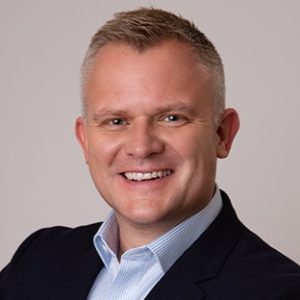
Anthony Shaw, Global CEO, North Highland
Shaw says the leaders who grow fastest put themselves in situations where they are “stretched, uncomfortable, and sometimes exposed.” He recommends spending more time close to clients, seeking experiences outside one’s functional expertise, and actively asking for honest feedback, noting that feedback tends to become more filtered as leaders become senior. Drawing on his own career, which has included consulting, running digital businesses and an HR leadership role despite not having a traditional HR background, Shaw says some of his most valuable lessons came from roles he was not fully qualified for on paper. His broader view is that leadership remains a craft in which leaders need to stay curious, keep learning and continue evolving throughout their careers.
In an August roundup of its most-watched CEO conversations, the Center for Social Capital revisited leadership experiences that show how executives have responded to setbacks, difficult business conditions and pivotal career decisions:

Charlie Malouf, President and CEO, Broad River Retail
Malouf described how Broad River Retail’s near-bankruptcy in 2015 changed the company’s approach to its people. Rather than responding by cutting headcount and costs, the company invested further in employees by creating clearer career paths, incentives and elevated titles for sales associates—an approach the article connects with its subsequent turnaround and growth. Malouf says business is more rewarding when it is focused on people and “lifting others up,” and describes the company’s philosophy as one of abundance and mutual prosperity that extends to employees and their families, customers, partners and the wider community.

Matt Wilkerson, CEO and Co-founder, Extern
Wilkerson’s career included several opportunities that did not develop as originally expected but became learning experiences. A cancelled internship while he was at MIT led him to explore consulting and banking before working at Morgan Stanley; he later moved into venture capital but found that environment did not fully align with his values. He subsequently co-founded luxury e-commerce platform AHAlife, where he says he learned about entrepreneurship while “making every mistake you can imagine.” Wilkerson says those accumulated experiences gave him greater confidence to take a bigger risk of his own, eventually leading him toward the challenge of helping young people gain meaningful jobs and careers through Extern.
Executive Movements:
Leadership Transitions & Strategic Pivots
CXO Movements
Keurig Dr Pepper
Keurig Dr Pepper has named Russ Torres CEO of the future Global Coffee Co., ahead of its planned separation in early 2027. Torres will join KDP on November 3 as CEO of its Coffee Operating Unit, leading the integration of KDP’s and JDE Peet’s coffee operations before the separation. He joins from Kimberly-Clark, where he is President and COO, overseeing operations across more than 30 countries. The future Global Coffee Co. is expected to generate approximately $16 billion in annual revenue, employ more than 25,000 people and serve consumers in over 100 markets.
Source: Keurig Dr Pepper Names Russ Torres Chief Executive Officer of Future Global Coffee Co. – Oct 1, 2026
First Merchants Corporation
First Merchants Corporation announced that CEO Mark Hardwick will retire at the end of 2026 after 29 years with the bank. Mike Stewart, currently President of First Merchants Bank, will become President and CEO at the start of 2027. Stewart has been with the bank for more than 18 years and plans to build on its Midwestern presence through deeper customer relationships, greater use of technology and customer-centric products. Hardwick’s tenure included 18 acquisitions.
Paramount Skydance
Paramount Skydance has appointed Ynon Kreiz as Co-Chief Executive Officer and a member of its board, with David Ellison remaining Chairman and principal executive officer. Kreiz, a longtime media executive, is set to oversee day-to-day operations, while Ellison focuses on creative direction and capital allocation. The leadership change comes ahead of the planned closing of the Warner Bros. Discovery acquisition and follows a multibillion-dollar secured debt raise.
Source: Paramount Skydance (PSKY) Names Ynon Kreiz Co Chief Executive Officer, Is It Fully Valued?
Hines
Hines has announced a leadership transition effective January 1, 2027, with Jeff Hines stepping down as Chair and CEO of Hines Global Income Trust to become Chairman of Hines. Laura Hines-Pierce will become Chair and CEO of Hines Global Income Trust and serve as Co-CEO of parent firm Hines alongside Adam Hines, who will also join the Trust’s board. At Hines, David Steinbach will become its first President, while Alfonso Munk will serve as Global CIO.
Source: Hines Global Income Trust Announces Leadership Transition Plans – The Globe and Mail
Verra Mobility
Verra Mobility has appointed Jon Newhard President and CEO, effective November 1, 2026. Newhard joins from Yunex Traffic GmbH, where he served as CEO, and brings more than two decades of experience across transportation, mobility and technology-enabled businesses. He succeeds Jon Keyser, who has served as interim President and CEO since June and will remain temporarily in an advisory capacity to support the transition. Newhard previously held leadership roles at Clinc, Cubic ITS and Advanced Traffic Solutions.
Source: Verra Mobility Appoints Jon Newhard as Chief Executive Officer
Entergy
Entergy has named David Borde President and CEO of Entergy Texas, effective October 5, succeeding Eliecer Viamontes, who has left the company for other opportunities. Borde has been with Entergy since 2009 and most recently served as Vice President, Utility Strategy and Regulatory Initiatives. His experience at the company spans utility strategy, regulatory affairs, finance, investor relations and corporate development.
Source: David Borde named president and CEO of Entergy Texas
FuelCell Energy
FuelCell Energy has appointed Matthew Latino Executive Vice President, CFO and Treasurer, effective October 7, 2026, succeeding Michael Bishop in a planned transition. Latino joins from Xylem, where he served as Senior Vice President, Finance and Segment CFO of its approximately $2 billion Measurement & Control Solutions business, having previously led investor relations. Bishop, who served as CFO for 15 years, will remain a senior advisor through the company’s 2027 Annual Meeting of Stockholders. The transition comes as FuelCell Energy focuses on scaling manufacturing, converting commercial opportunities linked to AI and data center power demand, and maintaining financial discipline.
Source: FuelCell Energy Announces Chief Financial Officer
General Dynamics
General Dynamics has named Danny Deep its next CEO, effective January 2027, succeeding Phebe Novakovic, who will become Executive Chairman after leading the company since 2013. Deep, appointed President in 2025, previously held senior leadership roles across the company’s land systems, combat systems and global operations businesses. The transition comes amid sustained demand for General Dynamics’ defense and aerospace products, including submarines, combat vehicles and Gulfstream jets.
Source: General Dynamics taps insider Danny Deep as next CEO | Reuters
AGNT
AGNT, formerly eXp World Holdings, has appointed Leo Pareja CEO, effective October 8, 2026, succeeding founder Glenn Sanford, who will remain Chairman of the Board and focus on long-term strategy. Pareja has served as CEO of eXp Realty since 2024 and previously held senior strategy and affiliated services roles. He led AGNT’s acquisition of NextHome in May 2026, expanding the company into franchising. The planned succession comes as AGNT scales its AI-native, multi-model real estate platform across domestic and international markets.
Source: Leo Pareja Named Chief Executive Officer of AGNT; Founder
MFA Financial
MFA Financial has announced that Craig Knutson will retire as CEO on June 30, 2027, after nine years in the role, while remaining on the Board. Bryan Wulfsohn, currently President and Chief Investment Officer, will succeed him as President and CEO on July 1, 2027, and join the Board in January. A 16-year MFA veteran, Wulfsohn has extensive experience overseeing the company’s investment portfolios. Andrew Kail, formerly Head of Residential Lending at Starwood Capital Group, will join as Senior Vice President and Chief Investment Officer on January 1, 2027.
Source: MFA Financial, Inc. Announces CEO Succession Plan and Senior Leadership Appointment
Albertsons Companies
Albertsons Companies has appointed Cody Perdue Interim CFO, succeeding Sharon McCollam, who previously announced her retirement as President and CFO. Perdue, who joined Albertsons in 2013, currently serves as Senior Vice President of Treasury, Investor Relations and Risk Management and will retain those responsibilities during the transition. McCollam will remain an advisor through February 27, 2027, while the company conducts a search for a permanent CFO.
Source: Albertsons® Companies Names Cody Perdue Interim Chief Financial Officer
Penguin Solutions
Penguin Solutions has appointed Stephen Cumming Senior Vice President and CFO, effective October 6, 2026, succeeding interim CFO Aaron Johnson, who returns to his role as Vice President of Finance and Accounting. Cumming most recently served as CFO of Edgio and previously held CFO roles at Cambium Networks, Kenandy and Atmel. His experience spans infrastructure systems, software and semiconductors. The appointment comes as Penguin Solutions seeks to scale its AI Factory Platform business and pursue profitable growth, supported by financial and operational discipline.
Source: The Top 5 Analyst Questions From Penguin Solutions’s Q3 Earnings Call
Curtiss-Wright
Curtiss-Wright has appointed Gary Ogilby Interim CFO, effective October 6, 2026, following K. Christopher Farkas’s decision to retire at year-end. Farkas, who served as CFO since 2020, has stepped down from the role but will remain Executive Vice President through December to support the transition. Ogilby, who joined Curtiss-Wright in 2010, is Senior Vice President and Corporate Controller, overseeing accounting, financial planning, reporting and internal controls. The Board has initiated a search for a permanent CFO.
Source: Curtiss-Wright Announces CFO Transition
ADVASA
ADVASA has appointed William Witherspoon CFO, effective October 6, 2026, succeeding Grady Ryther, who had served as interim CFO since August and will continue as CEO. Witherspoon joined ADVASA’s Board in June 2026 as an independent director and brings experience in asset acquisition, financing, real estate development and financial consulting. He currently serves as Asset Acquisition Manager at UMcapital and Principal of Hubert Development. The appointment comes as the fintech company pursues growth in earned wage access and financial infrastructure solutions.
Source: ADVASA Appoints William Witherspoon as Chief Financial Officer
Henry Schein
Henry Schein has appointed Emmanuel Caprais Senior Vice President and CFO, effective November 4, 2026, succeeding Ronald South, who will transition to a senior advisory role after 18 years with the company. Caprais, formerly CFO of ITT, brings more than 25 years of experience across finance, operations, strategy and M&A, and will join Henry Schein as an advisor on October 12 to support the transition. The company also anticipates adding a Chief Strategy and Transformation Officer and a technology leadership role covering AI, data and broader technology needs.
RB Global
RB Global has announced four executive promotions, effective October 8, 2026, as part of an organizational restructuring to support growth. Steve Steinberg has been named CFO, Shiv Dutt Chief Digital and Strategy Officer, Jake Lawson President of Heavy Equipment & Transportation North America, and Sam Wyant President of Auto North America and International. The changes establish clearer business-unit accountability and bring technology, digital and M&A strategy under Dutt’s newly created role. CFO Eric Guerin and COO Steve Lewis will depart the company.
Mueller Water Products
Mueller Water Products has appointed Michael Morgan Executive Vice President, Finance, effective October 28, 2026, with Morgan set to become Executive Vice President and CFO on or about November 19. He succeeds Melissa Rasmussen, who will remain CFO through the filing of the company’s fiscal 2026 Form 10-K and serve in an advisory role through December 31. Morgan joins from Indicor, where he is CFO, and previously held senior finance roles at Labcorp, Timken and PerkinElmer. His experience spans financial strategy, capital allocation, enterprise planning and acquisition integration.
Source: Mueller Water Products Appoints Michael Morgan as Chief Financial Officer
Polar Power
Polar Power has appointed Chris Mayer Co-CEO under a new Office of the CEO structure, with founder Arthur Sams continuing as Co-CEO. Mayer will take responsibility for corporate strategy, financial performance, commercial growth, capital markets, investor relations and strategic investments, while Sams will continue to oversee sales, engineering and manufacturing. Mayer brings experience across manufacturing, public markets, finance, and go-to-market strategy. The restructuring comes as Polar Power focuses on opportunities across telecom, data centers and defense while placing greater emphasis on scalability, product performance and financial discipline.
Source: Polar Power Announces Management Restructuring With New CEO Alignment
Convera
As it advances its global money movement platform, Convera announced four senior leadership appointments across operations, technology, product and information systems:
- Mike Cahill — Executive Vice President and Chief Operating Officer
- Jon Southall — Senior Vice President and Chief Technology Officer
- Tui Allen — Senior Vice President and Chief Product Officer
- Chris Steinig — Chief Information Officer
Cahill will lead Convera’s combined Product, Technology and Operations organization, while Southall, Allen and Steinig will lead technology, product and enterprise systems responsibilities supporting the company’s cross-border payments, FX risk management and multi-currency platform.
Source: Convera appoints four senior leaders to accelerate its global money movement platform
Comtech
Comtech has appointed Richard “Rich” Nyren Executive Vice President, Finance, with Nyren set to succeed Michael Bondi as CFO following the filing of the company’s first-quarter fiscal 2027 Form 10-Q. Amy Rothstein-Hovey has joined as General Counsel and will succeed Don Walther as Chief Legal Officer and Corporate Secretary following the anticipated completion of Comtech’s Satellite & Space Communications transaction. The leadership transition comes as Comtech prepares to sell most of that business and concentrate its operations around Allerium’s public safety and mobile network technologies.
Source: Comtech Announces Leadership Updates
Verastem Oncology
Verastem Oncology has appointed Michael P. Bailey President and CEO, effective January 1, 2027, succeeding Daniel Paterson, who will retire after 15 years with the company and remain on the Board and serve as an advisor. Bailey, a Verastem director since May 2026, brings more than 30 years of biopharma experience, including over 25 years in oncology drug development and commercialization, and previously served as President and CEO of AVEO Pharmaceuticals. The succession comes as Verastem builds its commercial oncology business around AVMAPKI FAKZYNJA CO-PACK and advances VS-7375 through its clinical development program.
Source: Verastem Oncology Announces Planned Chief Executive Officer Transition and Succession Plan
EnerSys
EnerSys has named Navi Grewal Chief Digital, AI and Information Officer, effective October 16, 2026. Grewal joins from MasterBrand Cabinets, where she was Global Chief Digital and Technology Officer, and previously held senior technology roles at DuPont. At EnerSys, she will lead digital, AI, IT, cybersecurity and enterprise data strategy as the company looks to simplify operations, improve productivity and make greater use of technology and data across the business.
Source: EnerSys Appoints Navi Grewal as Chief Digital, AI and Information Officer
ManpowerGroup
ManpowerGroup has named Becky Frankiewicz CEO, effective January 1, 2027, while current CEO Jonas Prising will move into the Executive Chair role after leading the company since 2014. Frankiewicz, who will also join the Board, currently serves as President and Chief Strategy Officer and has been with ManpowerGroup since 2017. She previously led its North American business before taking on broader responsibility for commercial strategy and AI integration across the company.
Insights: Inferring the why
The strongest signal across these appointments is a shift from replacement hiring toward mandate redesign. Companies are not only choosing new executives; they are redefining where authority sits, which capabilities need to be combined, and how succession should support a different operating agenda. The appointment itself is increasingly a consequence of a broader organizational decision already underway.
- Executive decisions are being made earlier in the business cycle.
Some appointments are taking place before a separation, transaction, retirement, or structural change is complete. The incoming executive begins while the organization is still preparing for what comes next.
That creates room to influence priorities before the new structure is fully in place. It also allows the board to align the appointment with the operating model being built rather than waiting until the change has already occurred.
- The mandate is changing alongside the person.
Several moves combine areas that might previously have sat apart. Strategy, operations, technology, product, AI, data, commercial growth, and capital markets are appearing in broader combinations.
The significance lies in where decision rights are being concentrated.
Where execution depends on several functions moving together, companies appear more willing to place connected decisions under one senior executive rather than rely on coordination across separate mandates.
- Continuity is being retained selectively.
Outgoing executives are often remaining as chairs, directors, advisors, or temporary transition partners. Their continued involvement preserves knowledge and relationships without preventing the successor from taking control.
This allows organizations to retain what is still useful from the previous tenure while giving the next executive room to operate differently.
- CFO selection is becoming more closely tied to the decisions ahead.
The finance appointments show considerable variation in the experience being prioritized. Capital allocation, investor relations, M&A, integration, operating finance, planning, and public-company execution appear repeatedly alongside core financial responsibilities.
The CFO brief is therefore becoming more situational. A divestiture, integration program, scaling phase, or push for stronger performance discipline can call for a very different profile even when the title remains unchanged.
- Technology ownership is moving closer to enterprise decision-making.
Digital, AI, cybersecurity, data, product, and core technology are being given clearer senior ownership in several of the movements. What stands out is how directly these areas are being connected with productivity, customer experience, operating performance, and strategic execution. The question is no longer simply who runs technology. It is who has the authority to connect technology choices with the priorities of the wider organization.
What This Adds Up To
The common thread is greater precision in how senior mandates are being defined.
Companies are adjusting executive structures around the work that now carries the greatest consequence, whether that is preparing for a separation, managing capital, coordinating technology and operations, or transferring authority without losing critical knowledge.
The most revealing part of a C-suite appointment may therefore sit outside the title itself: what has been added to the brief, what has been separated from it, when the move takes effect, and what else is changing around the organization.
Keeping Your Judgment in Development
At senior levels, experience is rarely in short supply. The harder task is ensuring that experience continues to challenge how you think rather than simply giving you more opportunities to apply what you already know. A few deliberate practices can help.
- Notice when the answer comes too quickly
Experience makes recognition faster. But when an important problem feels immediately familiar, ask what is materially different this time. A new competitor, customer expectation, technology or operating constraint may make an established pattern less useful than it first appears. The objective is not to distrust instinct, but to make sure familiarity has not closed the question too early.
- Separate what you know from what you are assuming
Before a consequential decision, distinguish the facts available to you from the conclusions you have drawn from them. Then identify the assumptions connecting the two. Making those assumptions explicit makes it easier to see which ones depend on conditions that may have changed—and where further evidence would materially alter the decision.
- Ask to see the disagreement before the recommendation
By the time an issue reaches the C-suite, competing views have often been reconciled into a clean proposal. On important decisions, occasionally ask which alternatives were seriously considered, where the team disagreed and why another option was rejected. Seeing the reasoning that preceded consensus gives you access to complexity that the finished recommendation may no longer reveal.
- Keep a record of what surprised you
Do not review only decisions that went badly. Pay attention whenever an outcome differs materially from what you expected, including when the result is better than anticipated. Record what you expected, what actually happened and what you had not adequately accounted for. Over time, recurring surprises can reveal where your understanding of the business or environment needs updating.
- Keep someone around who will challenge your reasoning
Seniority can make candid disagreement harder to obtain. Maintain professional relationships with people who are willing to question your reasoning regardless of your title, track record or confidence in a decision. Their value is not in routinely opposing you. It is in ensuring that there remains somewhere your argument has to stand on its own merits.
- Match the weight of judgment to the decision
Not every decision deserves the same amount of deliberation. Some choices are reversible and can be tested, adjusted or abandoned; others create commitments that are difficult to unwind. Distinguishing between the two can prevent executives from over-processing decisions that permit learning through action while giving genuinely consequential choices the scrutiny they require.
Keep Experience Working
The aim is not to make experienced executives second-guess everything they know. It is to keep experience responsive to new evidence, different perspectives and unexpected outcomes. Judgment keeps developing when experience remains a resource for thinking—not a substitute for it.